Get in touch
Thanks for getting in touch
A vital but often overlooked part of your protection package
A very important part of your protection package, Income Protection protects a percentage of your income if you are unable to work due to illness or injury. It is designed to kick in as your employer’s sick pay stops. At the outset, you choose whether you want this to run for two years, five years or until retirement. This type of protection is often overlooked, but the fact of the matter is that you are more likely to get ill in service than to die.
How we work
Many brokers will claim to offer ‘whole of market,’ but that may just mean that they offer every kind of product, but that they are all from the same insurer. Independent means that we can offer every kind of product from every insurer.
Benefits
- A single point of contact at all times
- Advice from as early in the process as you need
- Access beyond us to over 30 experienced advisors for the more obscure questions
- Access to every type of product from every insurer – we are truly independent
- By your side all the way – to the moment you move in and beyond
- Annual reviews at the very least
Why choose us
Sometimes it seems that there are almost as many financial advisors as there are financial products. Why should you choose us. We think there are many reasons of course, but among the most important are the following:
- We are truly independent and can access the whole of the market.
- We are advisers, not salespeople.
- We are transparent in our costs and fees.
- Our extraordinarily high rate of returning customers shows that people enjoy dealing with us.
This last is perhaps the most important. The proof of the pudding is in the eating. If we did not give our customers great service, they simply would not return.
Your personal and corporate protection specialist
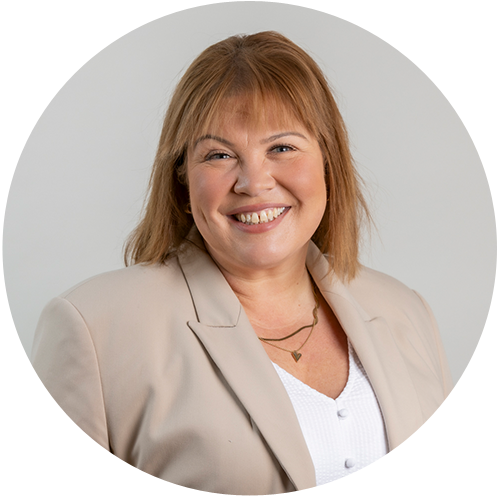
Coran Stubbington
Coran worked as a bank manager for 20 years, on the South Coast and in London. She was made redundant in 2019, moved into the world of Business Development Management, joining Protection and investment in 2023. She is delighted to return to her roots to selling financial services, which is something she has done for 27 years. She specialises in protection, especially for business owners and teams, helping owners protect the business, themselves, their family and their staff. She has teenage twins – a boy and a girl – and a dog called Branston. She loves hosting events.
"Lorem ipsum dolor sit met, consectetur adipisicing elit, sed do eiusmod tempor incididunt ut labore et dolore magna a liqua. Ut enim ad minim venom, quis nostrud exercitation ullamco laboris nisi ut aliquip ex ea comido consequat. Luis aute irure dolor in reprehenderit in voluptate velit esse cillim dolore eu fuggita nulla pariatur. Excepteur sint occaecat cupidatat non proident, sunt in culpa qui officia deserunt mollit animé id est labour."
Joe Bloggs, Managing Director
FAQs
What does it cover?
It covers most illnesses or injuries that leave you incapacitated and unable to work. All policies also cover mental health conditions, provided they are diagnosed by a medical professional. The policy may come with exclusions for any pre-existing medical condition that you or an immediate family member may have already experienced.
Does it cover redundancy?
No. Standard income protection policies do not cover unemployment or redundancy.
How much of my salary does it pay?
Policies typically pay out between 50% and 70% of your gross pre-incapacity income, averaged over the last three years. This accounts for the fact that you may not be paying certain work-related costs like daily commutes.
Let’s talk about your financial goals
For a detailed, confidential and without-obligation discussion, please get in touch.
Get in touch